









Asur tribe knowledge documentation is the subject of a new argument from an anthropologist who spent nearly two years in the field with the community: those who hold traditional knowledge should decide how it is recorded, not outside researchers.
Asur Tribe Knowledge Documentation: What Is at Stake
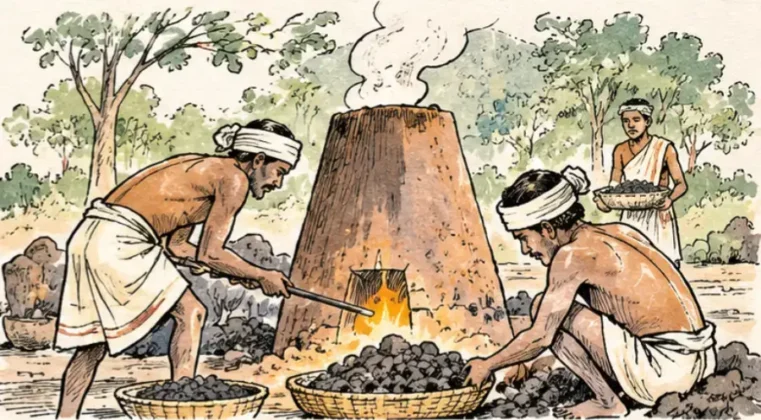
The Asur live in the Netarhat region of Jharkhand, India, and are classed as a Particularly Vulnerable Tribal Group. In an essay for The Indian Tribal, Dr. Abhay Sagar Minz of Dr. Shyama Prasad Mukherjee University in Ranchi describes a body of knowledge that goes well beyond a single craft. It includes traditional iron-smelting, which he presents as bound up with livelihood, environment, inherited skills and community ties, along with language, historical memory and cosmological beliefs.
It also covers oral traditions, sacred and ritual practices, seasonal practices and a detailed relationship with forests, mountains and rivers. Much of it, he notes, remains unrecorded.
Why Conventional Fieldwork Falls Short
Minz argues that even long immersion can miss deeper meanings, silences and cultural reasoning. He also challenges an assumption: being Adivasi does not automatically make a researcher an insider to another tribal community’s knowledge. And he points to a familiar pattern in which researchers leave without giving back, leaving research fatigue and distrust behind.
A Community-Led Documentation Model
His proposal is called Community-Led Participatory Documentation. Under it, community members decide what is documented, how, by whom and under what restrictions, while researchers act as facilitators. The guiding idea is that the work is for the community and by the community. Training young people from the community is meant to keep the work going after outside researchers leave.
The model recognizes that some knowledge is restricted by age, gender, ritual status or lineage, and that one person’s consent is not always the community’s. It also treats digital tools as useful but only under community-controlled rules for access, storage, ownership and reuse. Minz invokes Indigenous Data Sovereignty and warns about misuse, including the use of recorded material to train AI systems. Finally, he says documentation should preserve cultures as living and changing rather than freezing them like museum pieces.
A Program in Practice
The essay describes a one-day orientation program for the approach, opened by an eight-year-old Asur girl, Sukanya Asur. It was co-organized by the International Documentation Centre at Dr. Shyama Prasad Mukherjee University, with academic collaborators from CoRSAL, Indiana University Bloomington and the University of North Texas in the United States.
Why This Matters for the Shamanic Community
Shamanic and earth-based traditions are largely carried by voice, ceremony and lineage. The same questions Minz raises apply to teachers, authors and platforms everywhere: who owns a teaching, who may share it, and what happens when it is digitized? For a portal like ours, the lesson is to listen to custodians first, respect restricted knowledge and credit communities properly. If you hold or share Indigenous teachings, our Wisdom Articles directory is a place to share your work with care.
Read the Full Story
Read the full essay at The Indian Tribal.
Explore More From Shaman Portal
Browse our Shaman News archive, explore Shamanic Wisdom Webinars, or return to the Shaman Portal homepage.