












Egyptian tribes council gold mining talks have produced a breakthrough in southern Egypt, according to Ahram Online. A tribal-led initiative says it has found a path forward for the “dahaba,” the local name for informal gold prospectors, and tribal leaders have publicly thanked President Abdel-Fattah El-Sisi for backing it.
Egyptian Tribes Council Gold Mining Initiative: What Happened
Ahram Online reported on 13 November 2026 that the dispute over illegal gold mining in southern Egypt had seen a breakthrough after presidential directives to find solutions that protect the rights of both citizens and the state. The effort is being run through an initiative of the Council of Egyptian Tribes and Families, headed by Ibrahim El-Organi, in coordination with the authorities and the Future of Egypt Authority, known as Mostaqbal Misr.
In a video statement, Mohamed Mubarak Al-Rashidi, chief of the Rashaida tribe, thanked the president for resolving the crisis. Members of the Ababda tribe also thanked him in a video for supporting the council’s initiative to address the issue and regularize the status of workers in the sector.
The Expanded Meeting
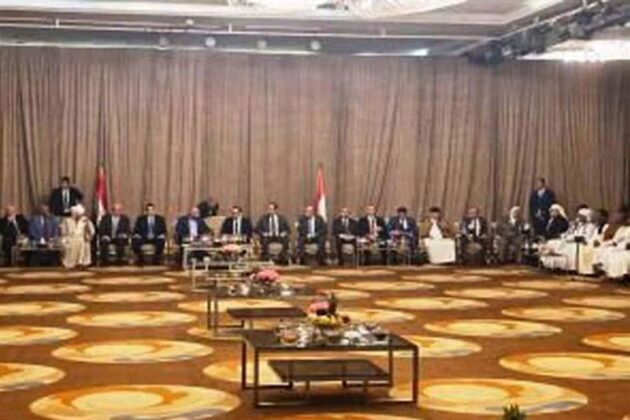
An expanded meeting sponsored by El-Organi brought together members of both houses of parliament, representatives of tribes and families from Aswan, Halayeb, Shalateen and Marsa Alam, and representatives of security agencies. Discussion focused on regulating gold-mining activity and on the cases of people detained in connection with illegal prospecting.
The Proposed Framework
The initiative aims to create an agreed framework for the challenges facing miners in southern areas while keeping the state’s rights over its natural resources. It would define workers’ rights and obligations and allow them to work within existing laws and regulations. The stated goal is a balance between citizens’ rights and state entitlements, protecting livelihoods in border areas while regulating the use of mineral resources under state supervision.
The Future of Egypt Authority stressed the need for coordination and follow-up so that the initiative can be carried out, miners’ status can be formalized and their problems resolved in line with the law.
What Is Still Unclear
The report describes goals and statements, not final legal terms. It does not say when the framework will take effect, how many miners or detainees are involved, or what rules will apply. As with any story relying on official and tribal statements, it is worth watching for independent confirmation as details emerge.
Why This Matters for Our Readers
Many communities who live close to the land, including desert and border peoples, depend on resources that governments also claim. This story is an example of tribal councils acting as intermediaries between local livelihoods and state law. It is a reminder that questions of who may use land and its minerals sit at the center of many Indigenous and traditional-community struggles around the world, a theme we follow in our Shaman News archive.
Read the Full Story
Read the original report at Ahram Online.
Explore More From Shaman Portal
Discover a teacher in Shaman of the Month, see Causes & Support listings, or return to the Shaman Portal homepage.