











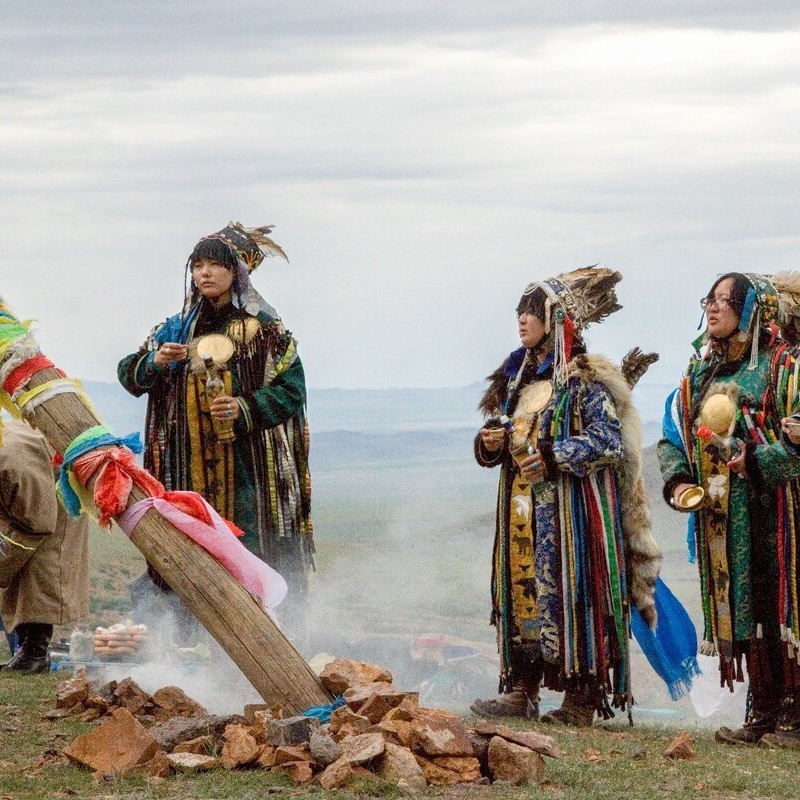
The categorization of shamanism is influenced by how knowledge is transferred and the focus of the shaman’s actions. Over time, the classifications have slightly evolved. The four main types are:
1. Primitive or Familial Shamanism:
This type involves the participation of all family members, including the youngest, in rituals. Guests may also be included. Sacredness is not yet emphasized. Primitive Chukchi tribes, as described in Pavel Bersnev’s “Historical Aspects of Shamanism,” practiced shamanic rituals during hunting holidays. These rituals took place in a large tent, which was completely enclosed and filled with smoke. Through cries and drumming, the entire family, along with relatives, friends, and guests (around 20-25 people), induced an ecstatic state in those present.
2. Clan Shamanism:
In this stage, the shaman is considered a servant of the clan cult. Rituals are no longer conducted collectively, but each clan has one shaman who communicates with the spirits.
3. Individual Shamanism:
Individual shamanism emerged when exceptionally skilled individuals with strong leadership qualities stood out among clan shamans. They took responsibility for representing multiple tribes to the spirits. This is when male shamans began to take a prominent role. With the rise of individual shamanism, shamanic institutions started to form, traditions and rituals were established, cherished, and passed down to future generations.
4. Non-lineage Shamanism:
This modern version of the shamanic practice developed with the advancement of metropolises. It does not require the shaman to be related to a specific tribal community, and that’s why it is also known as neo-shamanism. Carlos Castaneda is considered one of its founders. Today, neo-shamans can be found in a range of professions, including occultists, psychologists, ethnographers, and religious researchers.
Furthermore, there is a growing form of shamanism known as eco-shamanism, which emphasizes a connection with nature and the environment. However, regardless of the names and specificities of various shamanic movements, they are all united by a desire to synthesize past accomplishments. This includes incorporating shamanic techniques of achieving ecstasy, promoting a philosophy of unity, and cultivating a respectful attitude towards the planet’s flora and fauna.
All about Siberian shamanism on my official website: https://ahamkara.org