












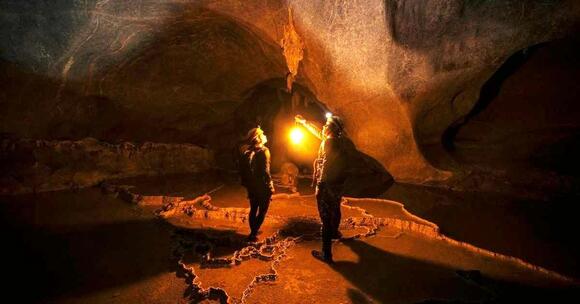
Various caves across the world served as sites for prehistoric activities; however, some of them may stun experts. One such location was the Etxebarri Cave, considered one of the most challenging caverns to be explored by Palaeolithic humans. Archaeologists found paintings in the cave from 16,000 years ago, as published in the Journal of Field Archaeology. This artwork was used as a canvas to discern the pathway taken into the cave and how these ancestors were able to access some of the remote sections. The human interaction with this deep subterranean environment during this period was physically demanding, risky, and challenging. Early reports suggested the cave could have been used as a Shaman training center and could reveal more secrets from the arts on the wall. Some parts of the cave and art still remains unaccessible.
‘Sinkhole of the Angel’
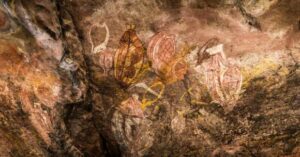
The Stone Age paintings around 16,000 years ago were of red ocher, black charcoal, and brown clay. The artwork depicted animals such as horses and bison, along with human figures and abstract symbols. The caves were not only narrow to squeeze through, but they had to climb down descending vertical walls and cross “an extremely exposed ledge.” The ledge overlooked a sheer 16-meter drop known as the “Sinkhole of the Angel,” according to IFLScience. “The main drop is 16 meters (52 feet), but actually it continues falling for 60 meters [197 feet],” stated study author Iñaki Intxaurbe. “So it’s very dangerous,” he added, reflecting on the hardships of navigating the cave.
Life or Death Expedition
Knewz.com noted that one misstep in the cave and the individual making the climb faced their doom. The result would have been so fatal that they had to use some kind of support, but as plant fibers decomposed quickly, there was no evidence left. Without any proof of climbing ropes in Etxeberri Cave, the team could not confirm whether this technology was used. The authors wrote in the study about the use of conifer wood, like pine, to light fires while visiting the cave, and burnt bone used as a fuel. “They also used animal fat, which could be introduced into a hole in a small stone or piece of wood to produce torches or lamps,” Intxaurbe mentioned about the individuals.
Living Legacy
The researchers also found flint tools that looked like they were used to away the rock surrounding the cave. This tool was likely used to create narrow passages or clear obstacles in the path while making the climb. It indicated that prehistoric cavers developed “the same technology that we use nowadays in caving,” but in a more primitive form, according to the authors. However, the bigger concern was why these ancient hunter-gatherers took the risk of making this journey and leaving their mark in this cave. The artwork in this treacherous cave could be substantiated by the nature of the images as to why they were made in that spot.
Possible Shaman Training Center
The most accessible parts of the cave were decorated with larger and finer paintings that could be easily sketched on the walls. The narrower and deeper the cave got, the less refined the paintings were, as these sections were largely unreachable. The author speculated that the large images could be ‘public’ pieces by a shaman, and the less refined could have been made by juveniles. The whole cave might have been used as a shaman training center. These were merely theories, but the lack of human remains in the cave indicated that none of the artists made any mistakes or missteps while navigating through the difficult paths of the cave to create art.