










Seoul Geumseongdang Shamanic Paintings to Be Designated Composite Heritage Combining Tangible and Intangible Value.
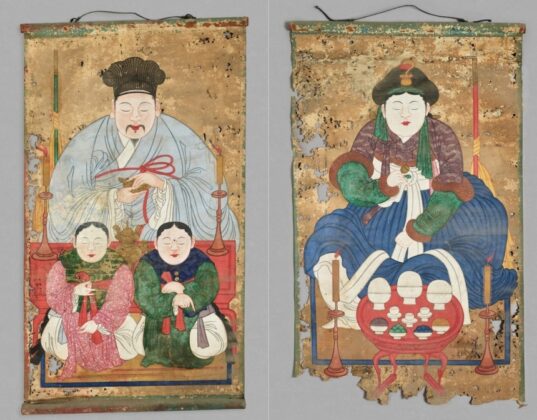
The Korea Heritage Service announced Monday that it will provisionally designate the late 19th-century “Seoul Geumseongdang Shamanic Paintings,” currently housed at the Eunpyeong Historical Hanok Museum in Seoul, as a National Folklore Cultural Heritage.
These works were enshrined inside Seoul Geumseongdang, a shrine that honored both Geumseong Daewang and Prince Geumseong (1426-1457), the sixth son of King Sejong. The collection comprises eight pieces in total, including Sambulsahalmeoni, Maengindosa, and Byeolsang.
The Legacy of Prince Geumseong and Shamanic Beliefs
Prince Geumseong is remembered as a symbol of loyalty, executed for attempting to restore King Danjong to the throne. Over time, he was deified in folk beliefs.
“The Shamanic Paintings depict deities who govern human fortune and disease, faithfully illustrating the shamanic beliefs of the Seoul and Gyeonggi region,” the Korea Heritage Service said.


View of Haknam Historic House in Andong. Photo courtesy of the Korea Heritage Service.
Exceptional Scarcity and Artistic Value
Nineteenth-century shamanic paintings are extremely rare, giving these eight works significant scarcity value. They also draw attention for their connection to Buddhist painting:
Stylistic Features: Rounded facial shapes and plump fingers suggest they were painted by a Buddhist monk-painter.
Technique: Shading techniques demonstrate a level of descriptive skill higher than typical folk art.
Authenticity: Pigment analysis confirms their production in the late 19th century.
Andong Haknam Historic House: 260 Years of History
Separately, the Korea Heritage Service designated “Andong Haknam Historic House” as a National Folklore Cultural Heritage. Built in 1759, this house holds distinctive architectural value due to its “open square” form, typical of the Andong region but with unique structural separations.
The house preserves approximately 10,000 relics, including diaries that offer a vivid window into the daily life and scholarly culture of the Pungsan Kim family across the 19th century.
Preservation of Shamanic Heritage
“We plan to cooperate so that the Seoul Geumseongdang Shamanic Paintings can be systematically preserved and actively utilized as historical, cultural, and tourism resources,” the Korea Heritage Service added.