











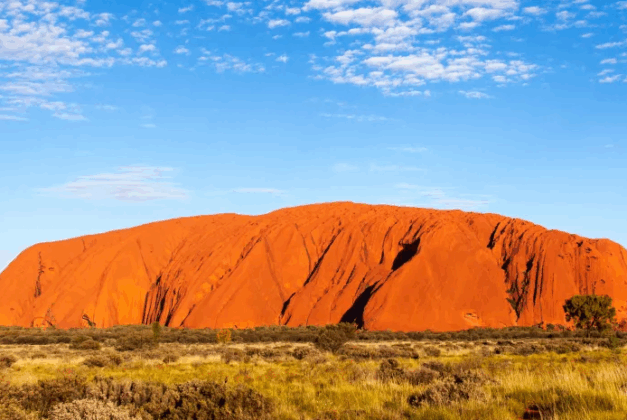
Tomorrow is the 40th anniversary of the hand-back in 1985 of Uluru to the people of the Pitjantjatjara tribe, aka the Anangu. One of about 600 tribes in Australia at the time of first settlement, the Pitjantjatjara had lived around the sandstone monolith for about 30,000 years before it was spotted, in 1873, by an explorer from Hoddesdon, Hertfordshire, called William Gosse.
To the indigenous Australians Uluru was a foundation stone of Tjukurpa: a belief system of mind-blowing complexity that explains the origins of life, defines morality and establishes all laws in a landscape considered not just a living entity but an ever-present member of the family.
To the settlers, though, it was just a cool tourist attraction, and by 1948 there was a road and a campsite. In 1959 a nearby airstrip had been built and in 1966 a chain was laid on the rock to help tourists climb to the top.
That really irked the Anangu. “How would you like it if our mob were climbing all over Westminster Abbey or Buckingham Palace?” an elder once asked me.

That this conversation took place in 2000, 15 years after the hand-back, made it even worse, and it would be another 19 years before the mindless trek to the top was finally outlawed.
Did the ban bring back the hallowed serenity the Anangu believe the rock deserves? Not really: helicopters, mountain bikes, guided runs and even Segways are on offer to the 250,000 tourists who come each year. Every night, just six miles to the north, 1,100 drones tell the Tjukurpa story to visitors who’ve paid up to £170 for dinner and the show.
Perhaps it wouldn’t be so bad if the Anangu were getting a fair share of the profits, but many argue that they are not. On the same day in 1985 that they recovered ownership of Uluru and the neighbouring Kata-Tjuta — the park formerly known as the Olgas — the Anangu leased it back to the Australian government for 99 years. In return they receive 25 per cent of the gate receipts but no share of the wider tourist revenue, estimated at £135 million in 2024. They have a Unesco-listed wonder of the world in their backyard and yet they’re stuck between a rock and a hard place.
In the 2021 census the median weekly wage for indigenous people in the Northern Territory was £278, compared with the national median of £580. In 2023 41 per cent of indigenous households in remote areas suffered food insecurity due to not having enough money for groceries.

Across Australia, indigenous people are under-represented in tertiary education, less likely to have a mortgage or own their own home and have a life expectancy that’s eight years less than non-indigenous Australians.
Closing the Gap — the Australian government’s version of Boris Johnson’s underwhelming levelling-up scheme — is an attempt to fix this: a moral, social and economic programme designed to reduce inequality.
Tourism isn’t in the remit but some policymakers realised that giving those who own the land — indigenous communities either own outright or have recognised interests in nearly 60 per cent of the Australian landmass — the opportunity to take a share of the profits was a good idea, so in 2018 Tourism Australia launched Discover Aboriginal Experiences.
It was slow to catch on — possibly because tourists were often so focused on the beaches, barbies, wallabies, wine and the lure of the classic Reef, Rock and Bridge tour that traipsing along a river bed with an aboriginal guide looking for barely edible bush tucker felt more like education than vacation.
But over the past seven years the guides have improved, the variety of tours has increased and public curiosity has finally been piqued by a culture that’s a staggering 65,000 years old. For context, that’s about 57,000 years before Britain became an island.

In 2021 the Daintree Rainforest — another Unesco-listed wonder — was returned to the Kuku Yalanji people with a commitment from the Queensland government to fund a management collaboration with the Queensland Parks and Wildlife Service. At the moment the Kuku Yalanji get first option on contracting and the development of tourism services, but the ultimate aim is to confer sole responsibility.
Juan Walker, who runs Walkabout Cultural Adventures out of Mossman in the Daintree, says the Kuku Yalanji need more freedom to develop their businesses. “The biggest need is support for product development. We have a number of skilled people who can deliver tourism experiences but we don’t have any large parcels of land to operate from. We currently use state or national park lands for which it can be difficult to obtain permissions and permits.”
Overall, though, the sentiment is that the aboriginal tourism industry is not only moving in the right direction but is fast becoming a fundamental part of the Australian experience.
In 2024 1.9 million Australians and 1.1 million overseas visitors took trips run by indigenous owners. In 2026 Today Discover Aboriginal Experiences will offer more than 200 options, ranging from one-hour walks in urban parks to multi-day outback adventures.
Bush tucker is still in fashion, but it’s the tales that are the real treat. All aboriginal history and wisdom has been passed down by word of mouth, so it’s no wonder that indigenous Australians are terrific storytellers.

If you’re in Perth ask Steve Jacobs of In Culture Tours to tell you about the white girl who married an aboriginal boy up in the Darling Scarp (inculturetours.com.au), and if you’re in the Daintree ask Chaseley Walker from Walkabout Cultural Adventures to explain the miracle of how her grandparents found each other (walkaboutadventures.com.au).
These are the stories you’ll remember long after other Australian memories have faded, and if you’re in Uluru from next April, you can join a new five-day, 33-mile hike from Kata-Tjuta to the base of Uluru — camping, eating around campfires and hearing stories passed down though millennia (greatwalksofaustralia.com.au). Such an opportunity seems to have been a long time coming, but what’s 40 years out of 30,000?