












November 5 – With 130 countries pledging at COP28 last year to triple renewable energy capacity globally by 2030, many stakeholders have highlighted the need to ensure that the transition from fossil fuels is a just one.
Concerns have been raised about the need to re-skill energy sector workers, for whom coal no longer offers a living, and to mitigate the impact of power lines and wind turbines on wildlife and nature.
Less attention has been paid, however, to the communities whose ways of live could be threatened by the push to develop renewable energy (RE).
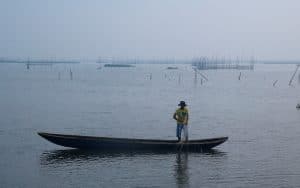
This has become a core concern on Laguna de Bay, a huge lake close to Manilla, in the Philippines. The lagoon has been earmarked for a trial of floating photovoltaic panels, as the country pushes to produce half its electricity from renewable sources by 2040 and wean itself off coal, which currently produces 62% of its power.
The project could produce 2 gigawatts of electricity and power 2 million homes, according to the country’s Department of Energy. But the 10,000 people who rely on fishing the lake for their living are worried about the effect these huge floating panels will have on fish stocks, and the ability to catch them.
The issue has been taken up by the Responsible Energy Initiative (REI), a consortium backed by the likes of Forum for the Future, which is working across several Asian countries to ensure that renewable energy achieves its potential, but in ways that are socially just and ecologically safe.
Earlier this year it produced a wide-ranging report, opens new tab highlighting the potential risks of the Laguna de Bay development, including coastal erosion, the disruption of photosynthesis on the lake, and the possibility of a drop in fish yields.
Cynthia Morel, principal strategist at REI in the Philippines, points out that as renewable energy scales, there will be intense competition for limited resources, with growing pressure to build floating solar panel installations on precious water resources and to convert agricultural land or even forests into solar power farms. If such developments are poorly thought out, they will likely run into fierce local opposition.
“If RE deployment is not done … in a responsible way, we’re going to have a slow down,” Morel says. “It’s the one time we have the opportunity to build an energy system that really has different goals, that is really a driver of more just and equitable outcomes, rather than just replicating the pitfalls of the current system.”
The REI is championing a rights-based approach and creating partnerships that bring together actors from across the value chain, helping to remove blind spots and unlock new kinds of conversations, including the creation of the infrastructure to effectively recycle panels, turbines and batteries at end of life.
The initiative builds on existing collaborations between employees, companies and governments, with a push to involve civil society and community groups, too, in particular Indigenous peoples, so that “as we’re scaling, we’re not only minimising harm but we’re (also) driving more comprehensive environmental and social outcomes”.
The need to build an energy transition in partnership with Indigenous peoples is also the focus of a recent report, opens new tab from the Business & Human Rights Centre (BHRRC) and Indigenous Peoples’ Rights International. It stresses that as indigenous peoples controlling an estimated quarter of the world’s terrestrial surface, their homelands are at the frontline of future RE expansion.
“Embedding respect for IPs’ (Indigenous peoples) rights, worldviews and interests into the global transition to RE is non-negotiable,” says the report. “The alternative is rights violations and consequent growing opposition to new energy projects, legal challenges, delays and rising costs.”
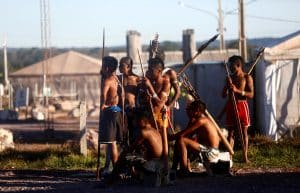
Worryingly, it adds, “Only a fraction of major RE companies today have policies that align with international standards for IPs’ rights and none that include public commitment to benefit-sharing. IPs’ human rights defenders around the world also continue to face significant threat and attacks – including from the private sector.”
Canada is one of those countries that has pledged to share the benefits of renewable energy development with its Indigenous people as it seeks to triple its clean energy production over the next 15 years.
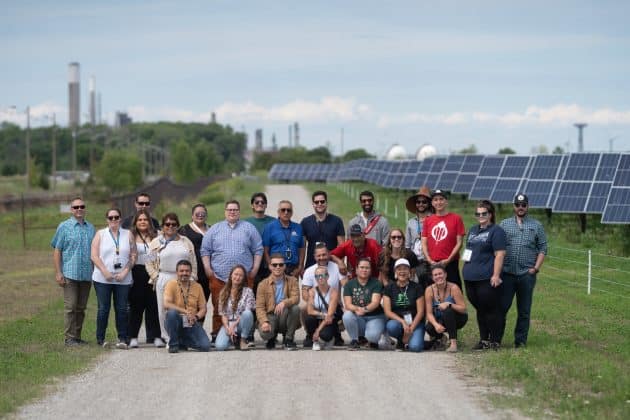
According to James Jenkins, executive director of the non-for-profit Indigenous Clean Energy (ICE), there has been a proliferation of partnerships in which Indigenous communities now hold upwards of a 50% stake in projects, many of which are sited on ancestral lands.
By making Indigenous nations equity partners, he explains, with powers to review projects and ask for changes to be made, they become “an asset to the partnership rather than a risk”.
Much of this is a legacy of a succession of Supreme Court decisions, dating back to the 1990s, that have enshrined a duty “to consult and accommodate”, he continues. Although Canada belatedly signed up to the U.N. Declaration on the Rights of Indigenous Peoples Act (UNDRIP) in 2021, implementing it will take time, says Jenkins, and until then the law will be based on these previous judgements.
Although these fall short of enshrining free, prior and informed consent (FPIC), a key pillar of UNDRIP, Jenkins believes that, “Indigenous nations in Canada have more legal teeth (compared to many other countries) when it comes to participating in the review of projects.” The courts have facilitated “the expansion of large clean energy projects by creating ways to favour indigenous participation”.
Across the country, Indigenous communities are taking control of developments, often whether they cross their ancestral lands or not. In Ontario, for instance, the utility Hydro One has offered Indigenous communities 50% equity on all new transmission lines, while in British Columbia, new power consortiums must contain an Indigenous partner.
Jenkins has worked closely with his own Walpole Island First Nation community in Ontario, developing equity agreements on three 100MW projects, involving more than 100 turbines. Co-ownership has allowed them to directly influence the impact of the projects and helped protect the environment where the community hunts, fishes and collects natural medicines, he explains.
The situation, however, becomes more complex when Indigenous communities want to exercise the rights they have on their land to mine for coal or drill for oil.
“It’s complicated,” says Philip Gass, director of the energy programme at the International Institute for Sustainable Development (IISD), “because on the one hand we want to phase down … (the) production of oil, gas and coal but at the same time these Indigenous communities … are now having ownership of these resources, and they want to enjoy some of the same economic development benefits that places like Germany or Canada enjoyed 50 years ago.”
He adds: “You need to take a really nuanced approach to it … (you) can’t tell an Indigenous community what they can do with their resources.”
Morel agrees that Indigenous people must have a right to self-determination and “the right to make the decision that benefits them most”.
But she also believes that their livelihoods are often tied to healthy ecosystems, with renewable energy companies sharing many of their environmental concerns, making them more likely partners that the fossil fuel industry. “Renewables will be the option of choice,” she says.