









As a follow up to the 2023 UNPFII’s recommendation, UNESCO has been working on a global study to promote the development of media for the benefit of Indigenous Peoples. An important step in this process has now been concluded: the review of existing literature and the development of the methodological framework to be used in the research. A key finding of the extensive literature review in the field of communication and journalism studies at the global level shows that there is no record of any previous global study on Indigenous Peoples and the media. This has implications for both the establishment of media operated by indigenous peoples, which increases media pluralism, and for the representation of diversity in all media types, which serves the public interest.
In addition to the key outcome of the literature review mentioned above, other findings and the progress made by UNESCO in the development of the study were presented at a consultative meeting in April 2024 on the margins of the 23rd session of the United Nations Permanent Forum on Indigenous Issues (UNPFII).
Mr Francisco Calí Tzay, Special Rapporteur on the Rights of Indigenous Peoples and a member of the working group established to prepare the study, recognised the importance of the media in the realisation of Indigenous Peoples’ rights:
I have decided to support and collaborate with UNESCO on the forthcoming study on Indigenous Peoples and Media. This is of paramount importance to collect data and information about the state of Indigenous media globally, and about how mainstream media organizations might be covering Indigenous issues and facilitating the engagement of Indigenous journalists, producers, editors and other media staff into their organizations.
Francisco Calí Tzay
Special Rapporteur on the Rights of Indigenous Peoples
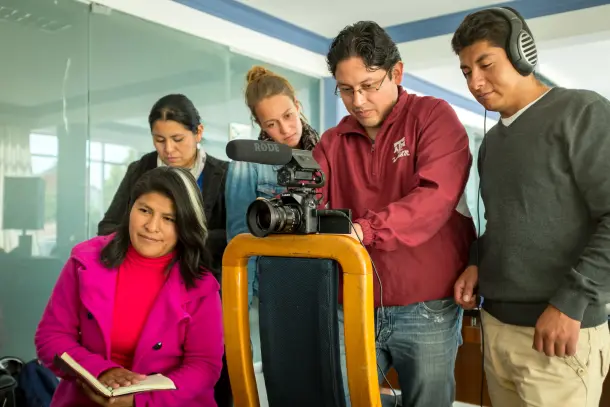
During the consultative meeting, Mr Robert Doane, Indigenous media professional and Senior Director at the Canadian Broadcasting Corporation (CBC), shared insights about the development and implementation of the institution’s 2024-2027 National Indigenous Strategy. He emphasised the importance of introducing transformative changes in media policy to ensure that Indigenous voices are heard and reflected in media coverage and programming.
Our approach at this point is how do you create change within a public service media organization that has been operating in a certain way for more than 80 years? How do you make sure that our voices are not only heard, but reflected in the programming? And how do we relate to others in the media landscape? Indigenous-led media is part of a media ecosystem.
Robert Doane
Senior Director at the Canadian Broadcasting Corporation (CBC)
Other speakers on the panel stressed the importance of stimulating change within Indigenous-led as well as mainstream media organizations. Transformation is also needed at the policy and decision-making level, particularly in relation to increasing the legal recognition of Indigenous-led media, promoting Indigenous storytelling in content production and creation of work opportunities for Indigenous media professionals.
The legal and institutional changes required by UNDRIP, including the Article 16, are usually not sufficiently addressed by the enactment of specific “Indigenous laws”, as many States have done, but rather will involve transforming broader legal structures and legislative frameworks in key areas.
Valmaine Toki
Vice Chair, Expert Mechanism on the Rights of Indigenous Peoples (EMRIP)
The report of the meeting summarizes three interlinked conclusions for further research:
- There are no global data collection mechanisms in place to study the relationship between Indigenous peoples and the media at the global level. The study serves as a platform for the further application of a human rights-based approach and for the development of a tailor-made research framework focused on Indigenous Peoples.
- Some small-scale research projects and initiatives reveal data gaps where research findings cannot be aggregated at a regional or global level. Thus, data gaps can be seen as one of the main obstacles to informed policy and decision-making regarding the implementation of Article 16 Media of the United Nations Declaration on the Rights of Indigenous Peoples (UNDRIP).
- To meet this challenge, there is a need to develop survey tools to collect data from both Indigenous and non-Indigenous media professionals around the world. In addition, a network of focal points could be established to facilitate the involvement of media in global consultation and the development of strategic recommendations.
The next step is to launch two surveys to collect data from Indigenous-run and mainstream media for the study. Further consultations are planned. One of them envisions to engage Indigenous-led media in dialogue during the upcoming Indigenous Media Conference in Oklahoma City, United States, on 25 July 2024. To conclude the preparatory process, UNESCO will organize an expert meeting at its Headquarters in Paris, France, from 26 to 27 November 2024, to bring together a wide range of stakeholders, including representatives of media organizations, UN Indigenous Mechanisms, experts, and public organizations working on media development issues to develop strategic recommendations for action.