











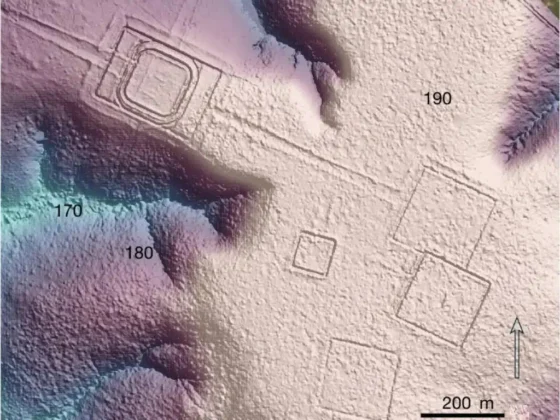
Aquiry geometric earthworks are giving the world a new way to think about ancient Amazonia. Huge circles, squares and other shapes carved into the land of western Brazil were made around the same era as Pythagoras lived in ancient Greece, according to a new report from Greek Reporter on research about the Aquiry civilization.
This is a follow-up to our earlier coverage of the discovery: read our first report on the Aquiry civilization.
Who Were the Aquiry?
The Aquiry is the name researchers use for a network of Indigenous communities that flourished in southwestern Amazonia between about 600 BCE and 850 CE. The name comes from the term Indigenous peoples used for the Acre River. Researchers stress it was not a single kingdom but a network of many communities, and that we do not know what languages they spoke or what they called themselves.
Airborne laser scanning, which can see through forest canopy, mapped earthworks across an area of roughly 183,000 square kilometers in the Brazilian states of Acre and Amazonas. A study in Nature, led by Martti Pärssinen of the University of Helsinki, estimated that this territory, less than 3 percent of Greater Amazonia, was home to between 1.25 and 3 million people early in the first millennium.
Aquiry Geometric Earthworks: Circles, Squares and Roads
The earthworks are known as geoglyphs, shaped as circles, squares, rectangles and octagons. Many are linked by straight roads, and the societies that built them used large centers for political and ritual purposes. Unlike many ancient cultures, they left no stone ruins, which is one reason these structures stayed hidden for so long under the forest.
Greek Reporter frames the finding with a striking comparison: while Pythagoras was working on geometry in the Mediterranean, people in Amazonia were also laying out precise geometric forms across the landscape. The comparison is a journalist’s framing, not a claim that the two traditions were connected. Pythagoras is traditionally dated to roughly 570 to 495 BCE.
What It Means for How We See Indigenous Amazonia
For decades the Amazon was described as a nearly untouched wilderness. The Aquiry findings point the other way: communities shaped the forest, cleared and managed land, built roads and gathered for ceremony in carefully designed places. Researchers note that Aquiry practices left a lasting mark on the environment as well.
Why This Matters for the Shamanic Community
Sacred geometry is a theme many of our readers care about, from medicine wheels to Amazonian patterned art. The earthworks invite a respectful question: what ceremonies took place inside these shapes? We do not know, and honest reporting says so. What we can say is that the Amazon’s Indigenous peoples today are the descendants of long, rich traditions of building, ritual and ecological care. To learn from living Amazonian teachers, explore our Shaman of the Month series.
Read the Full Story
Read the original article at Greek Reporter.
Explore More From Shaman Portal
Browse the Shaman News archive, see upcoming Shamanic Wisdom Webinars, or return to the Shaman Portal homepage.