







Korean shamanism, long seen as a traditional belief system, is finding new life overseas as emotionally resonant “healing” content.
“I can’t stop getting chills. I’m crying too,” one comment reads among hundreds on a short-form video clip on the Disney+ original television survival series “Battle of Fates,” which features shamans. “K-shamanism is really amazing,” another reads.
The clip showed cast members reading one another’s fortunes. When Jiseon Doryeong, one of the shamans on the show, looked into the fate of another shaman named Seulbi and told her, “You must have been very lonely,” Seulbi broke down in tears over painful family memories she had kept bottled up. The clip racked up 610,000 views.
Unlike the dark and frightening sensibility often associated with Western occultism, Korean shamanism is being received as a fresh and unusual cultural phenomenon, especially after the success of the Netflix animated film “KPop Demon Hunters” (2025).
The most popular K-shamanism content overseas in recent months has been “Battle of Fates.” According to market tracker WiseApp Retail, Disney+’s monthly active users rose to 2.95 million as of press time, up about 20 percent from 2.45 million in January, before the show premiered.
In Thailand, tickets for a fan meet and greet in April featuring four Korean shamans from the program — including Seulbi and Maehwa Doryeong — sold out in two minutes. A Disney+ Korea official said the company’s headquarters decided to produce an overseas version of “Battle of Fates” based on the success of the Korean original.
The range of K-shamanism content finding audiences abroad has also widened. “Phantom Lawyer,” a television legal fantasy series centered on shamanistic themes that recently began airing on SBS and Netflix,
ranked fifth globally in Netflix’s non-English TV category list in the week immediately after its release, from March 16 to 22.
The drama follows lawyer Shin Yi-rang, played by Yoo Yeon-seok, who begins seeing ghosts after opening a law firm in a building that used to house a fortune-teller’s shop, and goes on to resolve the grudges of the dead. At times, a spirit possesses Yirang, who then consoles the bereaved families left behind.
Analysts say Korean shamanismbased content began drawing serious overseas attention after the global success of “KPop Demon Hunters” last year. In the film, the story centers on HUNTR/X, a girl group tasked with protecting the world from evil spirits through a blend of powerful performances and music, a mission handed down from village shamans of the past.
“‘KPop Demon Hunters’ has transformed concepts such as the afterlife, shamans and rituals from elements of local culture into globally popular content material,” said Chung Yeon-hak, head of the Asian Comparative Folklore Society.
Film critic Min Yong-jun added that the film “blends Western exorcism with the characteristics of Korean shamanism, shifting shamanistic belief from the occult genre into fantasy and lowering the barrier to entry for overseas fans.”
Experts say what sets Korean shamanism apart from Western or Japanese exorcism stories is its distinctive ritual of healing. In Korea’s traditional shamanistic worldview, ghosts unable to leave this world are believed to carry deep resentment or unresolved sorrow, and only after achieving haewon — the release of that bitterness — can they depart peacefully for the afterlife.
“Traditional Korean shamanism has a strong tendency to see ghosts not as evil spirits but as people,” Chung said. “Another unique element is that a shaman’s gut [traditional Korean shamanistic ritual] accompanied by intense performance and
sound, creates a kind of communal catharsis and offers comfort.”
“In the Christian worldview of the West, exorcism is centered on driving out evil spirits,” Min said. “Japanese ghosts are also closer to malevolent entities, which makes them different from the worldview of Korean shamanism.”
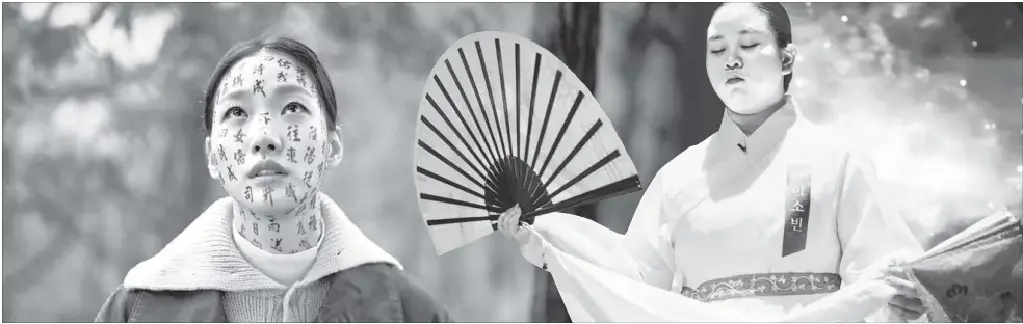
The emergence of attractive young shamans has also helped lower the barrier to shamanism-themed content. In “Battle of Fates,” shamans in their 20s — including Seulbi, Lee Sobin, Maehwa Doryeong and Lady Sowon — as well as teenage shaman Jiseon Doryeong appeared as bold and charismatic Gen Z figures.
This trend gained momentum after the success of such works as “Exhuma” (2024), featuring the highly skilled shaman Lee Hwa-rim, played
by Kim Go-eun, and former baseball player-turned-shaman Yoon Bonggil, played by Lee Do-hyun. SBS also broadcast “Fortune Tellers’ Love” (2024-25), a dating reality show featuring shamans.
Although shamanism-themed content has been popular in Korea for years and is now making an impact overseas, some warn against blind faith in shamanism. Pop culture critic Kim Heon-sik said reality programs should be careful not to grant shamans authority in areas that should instead be addressed by forensic science, psychology or psychiatry.
“In the case of reality programs, producers need to make a clear distinction on air between the domain of shamanism and its limits,” Kim said.