











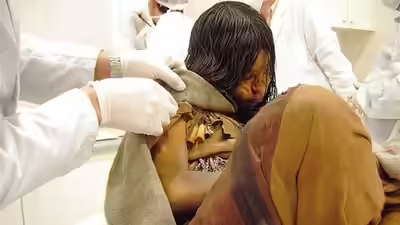
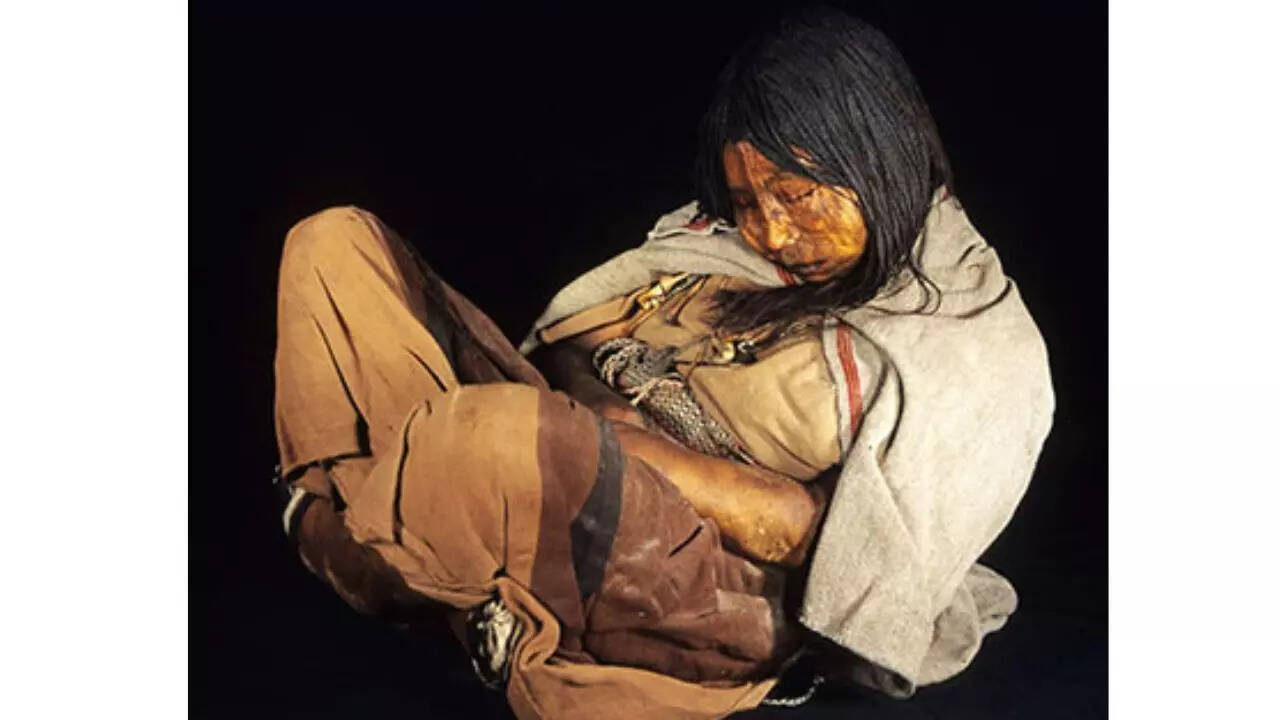
High in the Andes, above the clouds and far from everyday life, archaeologists uncovered a discovery that still feels unreal. The Llullaillaco Maiden was an Inca girl sacrificed around 500 years ago in a capacocha ritual, left on the slopes of a volcano at an altitude so extreme it preserved her in near-perfect condition.
Her skin, braided hair, clothing, and even internal organs remained astonishingly intact, creating one of the most lifelike ancient mummies ever found. Discovered in 1999 alongside two other children, her preservation opened a rare window into the Inca Empire’s beliefs, rituals, and the final days of a child chosen for a sacred fate.
A teenage girl killed to honour the mountain gods
The Llullaillaco Maiden was part of a capacocha ceremony, one of the most important religious rituals in the Inca world. These sacrifices were not random killings. They were state-organised acts carried out to honour powerful deities linked to mountains, nature, and imperial authority.
Spanish-era historical accounts describe capacocha as a sacred duty performed during major events, including imperial ceremonies, disasters, or moments when the empire sought divine protection. In many cases, the children involved were chosen because they were considered pure offerings, and some were linked to high status families.
What makes this story especially haunting is the setting. The sacrifice took place at a mountain shrine so high it feels outside the human world. For the Inca, that height mattered. Mountains were sacred beings, and the summit was believed to be closer to divine power than any temple in a city.
The mountain where she was found froze time itself
The Maiden was discovered on Llullaillaco, a volcano rising more than 6,700 metres above sea level. At that altitude, the environment becomes a natural preservation chamber. Temperatures remain far below freezing, and the air is extremely dry.
That combination prevented decay in a way almost never seen in ancient remains. Unlike many mummies that survive as dried skin over bone, the Llullaillaco Maiden remained preserved in a nearly intact state, which is why she still appears startlingly lifelike.
Archaeologists describe the site as the highest known archaeological discovery of its kind, with burials and offerings protected by the mountain for centuries.
Who discovered her and how the 1999 expedition unfolded
The mummies were discovered in 1999 by an archaeological team led by Johan Reinhard, a researcher long associated with high-altitude Inca sites, working alongside Argentine archaeologist Constanza Ceruti and other specialists.
Their expedition targeted the summit shrine of Llullaillaco, where excavations revealed separate burials and ceremonial offerings. What they found went far beyond a single body. It was a complete high-mountain ritual site, preserved in place with the victims and objects still arranged as they had been left five centuries earlier.
National Geographic later described the discovery as powerful evidence supporting early written accounts of Inca sacrifice rituals, because the physical clues on the mountain matched what chroniclers had recorded.
The capacocha ritual and how it was carried out
Capacocha was one of the Inca Empire’s most sacred ceremonies, combining religion, politics, and cosmic belief. The victims were often prepared over time, dressed in ceremonial garments, and brought across long distances to a chosen mountain shrine.
Scientific studies analysing the Maiden’s hair have shown traces of coca and alcohol in the period leading up to her death, supporting the idea that these substances were used to sedate or calm the children during the final stages of the ceremony. Researchers have also linked hair evidence to changes in diet, suggesting the Maiden received elevated foods and treatment before the sacrifice.
In many interpretations, the ritual was designed to show the empire’s relationship with the gods was active and protected.
The sacrifice was meant to secure health, stability, fertility, and divine favour across the Inca world.
What her body revealed that archaeology almost never gets to see
The Llullaillaco Maiden became famous because her preservation allows scientists to study details normally lost to time. Researchers have been able to examine soft tissue, internal organs, and biological traces that rarely survive in human remains of this age.
Because her hair and body remained intact, scientists could reconstruct parts of her final months with unusual clarity.
Instead of relying only on myths or written accounts, the evidence came directly from her own body, creating a rare and deeply personal record of an ancient ritual.
Where she is now and why the discovery still divides opinion
The Llullaillaco mummies are kept in Argentina at the Museum of High Altitude Archaeology in Salta, maintained under carefully controlled conditions designed to protect them from heat and humidity.
The display has also raised ethical debate, particularly among Indigenous voices who argue that sacred remains should not be exhibited.
The museum has defended its preservation work as a way to protect the bodies from looting and destruction and to educate the public about an important chapter of Andean history.
Even with that debate, the archaeological importance is undeniable. The Llullaillaco Maiden remains one of the most striking examples of how extreme environments can preserve the past, and how a single discovery can illuminate the beliefs, power, and rituals of an empire that once ruled the Andes.