











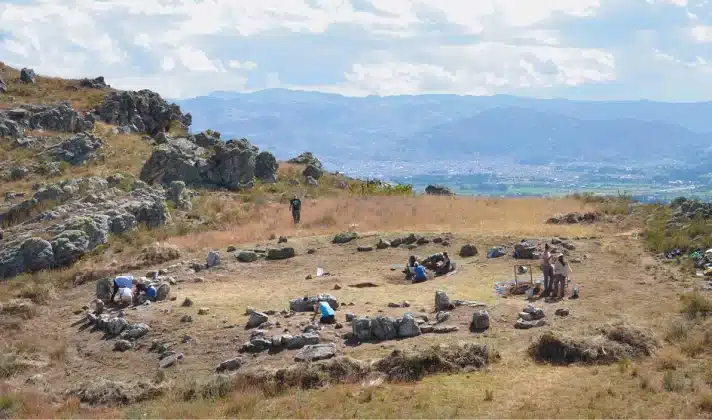
Excavations in the highlands of northern Peru have identified a circular plaza that may be among the earliest examples of monumental megalithic architecture in the Americas.
The Callacpuma archaeological site, located in the Cajamarca Basin, has been the subject of investigations for more than 60 years, but intensive excavations began here in 2015. The site covers c.250ha and encompasses domestic and agricultural terraces, several platform mounds, a large cave complex, and more than 100 rock-art panels, as well as the circular stone plaza in question, which is located near the summit.
The plaza’s existence has long been known to local people, but it was fully excavated between 2018 and 2022. The results of this research and the post-excavation analysis were recently published in Science Advances (https://doi.org/10.1126/sciadv.adl0572). The plaza, which measures 18m in diameter, was delineated by two concentric walls formed by closely spaced, large, vertical stones, with two entrances, at the south end and the western edge. Within the interior circle there appear to have been two or three small, enclosed rooms. The form, scale, and location of the plaza, combined with an absence of domestic artefacts, leaves little doubt that this was a ceremonial gathering place.
Radiocarbon dating of charcoal recovered during excavations points to a construction date of c.4,750 years ago, during the Late Preceramic Period. This is supported by the lack of ceramics in the construction layers, and the style of the structure, which differs from other, later constructions at Callacpuma. This date makes it one of the earliest circular plazas currently known in Andean South America. It is believed that the structure was used, at least periodically, for over 2,000 years. Ceramics typical of the Layzón Period (c.2,500-2,200 years ago) were found in the highest excavation levels and are believed to have been associated with the ritual closing of the plaza.
Circular plazas of later dates are well known elsewhere in the Andes, but these were typically sunken into the ground and often had plastered stone masonry walls. The Callacpuma plaza is therefore not a classic example of this type of structure, but it could represent an early offshoot of the emerging phenomenon, perhaps connected to the arrival of experimental farming in the northern highlands of Peru and the associated socio-economic changes that were starting to occur in the Late Preceramic Period.